1. Understanding Multi-Tenancy
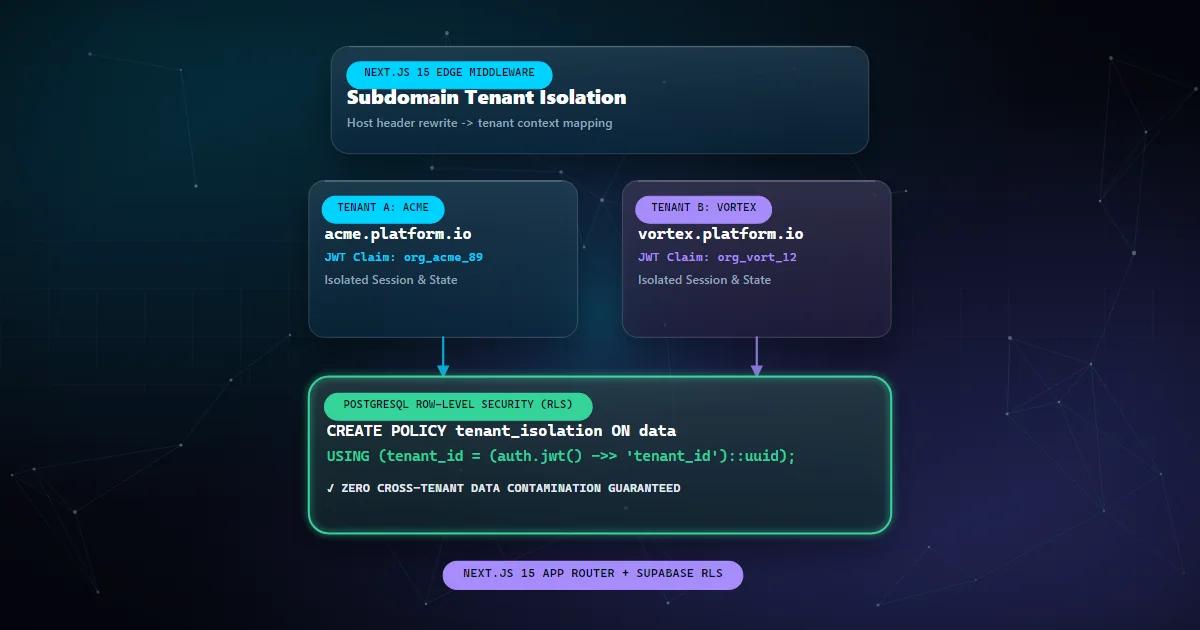
Multi-tenancy is a software architecture where a single instance of a software application serves multiple customers. Each customer is called a tenant. In a multi-tenant architecture, tenants' data is isolated to ensure privacy and security, while sharing the same application resources.
2. Architectural Principles with Next.js 15
Next.js 15 offers several features that are beneficial for building multi-tenant SaaS applications, such as server-side rendering and API routes. These can be leveraged to dynamically serve different content based on the tenant context.
const getTenantData = async (tenantId) => { // fetch tenant-specific data }By using environment variables and configuration files, you can separate tenant-specific settings and logic.
3. Implementing Tenant Isolation with Supabase
Supabase provides a robust backend solution that integrates seamlessly with Next.js, supporting real-time data and authentication features. Implementing tenant isolation involves structuring your database with schemas or using row-level security policies.
| Method | Pros | Cons |
|---|---|---|
| Schemas | Strong isolation, easy backups | Complex migrations |
| Row-Level Security | Fine-grained access control | Increased complexity |
4. Data Security and Integrity
Ensuring data security and integrity is paramount in a multi-tenant architecture. Supabase's row-level security policies allow you to enforce access control at the database level.
ALTER TABLE orders ENABLE ROW LEVEL SECURITY;5. Performance Optimization Strategies
Performance can be managed by optimizing queries and using caching strategies. Consider leveraging Supabase's built-in caching and indexing features to reduce latency.
Also, using Next.js's incremental static regeneration can significantly reduce server load and improve response times for static content.